BE THE CHANGE.

"The MATES mission is to end suicide in construction, one conversation at a time."

Stand up to Suicide

46+

out of every 100,000 male American construction workers die by suicide each year

4k+

over 3350 American and 750 Canadian men lost to suicide each year

9x

more suicide deaths than workplace injury deaths in the US each year

CHANGE STARTS WITH US

MATES is a comprehensive, WHO-recognised suicide prevention program with a difference: we’re built by construction, for construction. Our mission is to save lives through early intervention, shifting culture on our sites to encourage more mental health conversations between crew mates. And by inviting all employers, unions and advocates to join us in a unified response, MATES is the first program to tackle suicide in construction in the way WE work best — with trust, in safety, and together.

01.

ENGAGEMENT

We can’t create change if no one’s listening. That’s why MATES begins with whole-of-industry engagement. Our goal: to build relationships that unite employers, unions and industry bodies in our cause. Onsite, engagement is led by our team of dedicated MATES Field Officers, who ensure operations are set up for success before the program begins. At the strategic level, our leadership and executive influence change makers across corporations, community and government.

02.

DEVELOPING A PROGRAM WORKFORCE

We recruit, train, and support Field Officers, Case Managers and staff who understand construction culture. Through supervision and professional development, we build a confident workforce that delivers MATES with credibility and integrity.

03.

RAISING AWARENESS

To prove that urgent, co-ordinated action is needed, we need to make sure everyone in construction understands the size and scale of the problem. We shout it loud, as we introduce the MATES peer-led approach a best-practice, WHO-recognised solution to the problem.

04.

BUILDING CAPACITY

MATES rolls out with three tiers of training, delivered by Field Officers who have experience of life on site. Universal General Awareness training (GAT) challenges stigma around vulnerability, and equips every worker with tools to start a mental health conversation. Intermediate and advanced level training upskills volunteers to connect co-workers with support and deal with crisis situations, building in deeper layers of peer support on site.

05.

CONNECTING TO HELP

Beyond workmate-to-workmate conversations, MATES also establishes clear pathways for workers to access the community and professional support they need to be well. Each site is supported by a dedicated MATES Case Manager to facilitate these connections. We open doors to under-utilized existing supports, and share our evaluation insights to highlight gaps and further opportunities.

06.

ADVOCACY & LEADERSHIP

Sustained, permanent change is only possible when suicide prevention becomes a standard part of industry’s safety practice. MATES is a vocal advocate for change at industry and legislative levels, contributing to policy and structural reforms that improve psychosocial safety on our worksites. For now, and for long into the future.

07.

RESEARCH & EVALUATION

MATES is a living, evolving program, with continuous improvement driven by 20+ years of ongoing research. We collect feedback and outcomes data from every site, allowing us to refine our delivery and demonstrate our impact in real time. We are proud to share our findings back to industry to effect ongoing growth.

Suicide is everyone's business.

MATES builds networks of safety on site so no one has to carry it alone. We help crews notice when something’s wrong, start the conversation, and connect a workmate to support. We believe help should be close, practical, and shared. Everyone has a role to play.

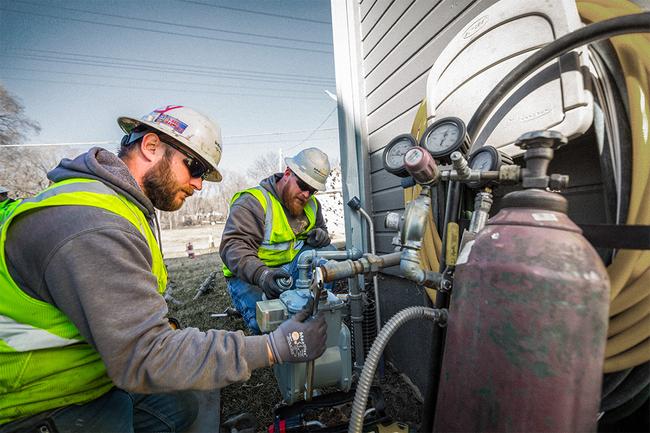
Built to earn trust at every level

For workers to engage with our message, they must trust that their wellbeing is MATES’ singular motivation. So, MATES remains impartial by design. We’re an independent, nonprofit entity. We’re supported by a non-partisan coalition of employers, unions and industry associations.

We take a shared-value approach to partnership and funding, putting purpose before profit to give more workers access to our life-saving program.


Research-backed, world-renowned

The MATES program is endorsed by the World Health Organisation (WHO) as a best-practice approach to suicide prevention. Our program is also backed by 20+ years of research and success in the Australian and New Zealand construction industries.

Delivered by workers for workers

Unlike standard programs, MATES is delivered by trusted industry peers. Our Field Officers all have experience in construction, allowing them to deliver training and interventions in a relatable, culturally sensitive way.

"Like everything we do in this industry, the answers are with the people closest to the work."

Safety Executive

Current featured Research

MATES is committed to evidence based practice. We work alongside leading research partners to evaluate our approach and identify future directions for our program.

Economic cost of U.S. suicide and nonfatal self-harm.

Overview: Suicide and self-harm have substantial societal costs. In the United States (US), the economic cost of suicide and nonfatal self-harm averaged $510 billion/year (2020 USD), the majority from life years lost to suicide. Working-aged adults comprised nearly 75% of the average annual economic cost of suicide. Costs include associated medical spending, lost work productivity, reduced quality of life f...

Psychosocial risks in the Canadian construction and extracti...

Overview: Workers in the Canadian construction and extractive industries are exposed to psychosocial risk factors (PRFs) and experience a greater prevalence of mental health issues than the public. The purpose of this study was to examine the relationship between five predictors (age, gender, residence type, employment arrangement, rotation status) and 15 response variables (measures of Canadian workers’ pe...

Suicidal thoughts and behaviours among construction workers:...

Overview: The construction industry records concerningly high rates of suicide compared to other industries. This study aimed to: 1) identify sub-groups within the industry that report elevated rates of suicidal thoughts and behaviors, and 2) identify patterns of risk and protective factors that may inform suicide risk. A large representative sample of construction workers in Western Australia participated ...

Mental health trends in the construction industry: A look at...

Overview: This issue examines US construction worker mental health trends, including anxiety, depression, serious psychological distress, seeing a mental health professional, medication use, suicides, and overdoses. Results show that construction workers experience disproportionate levels of depression, anxiety, and substance use; however, most workers do not seek any kind of support, including professional...

Suicidal Ideation in the Australian Construction Industry: P...

Overview: Suicide in the Australian Construction Industry (ACI) is a significant issue, however minimal understanding of suicidal ideation prevalence, as well as the potential role psychosocial job adversity and increased adherence to traditional masculine norms may play in its presence, is apparent. A representative sample of Australian men were used to create initial understandings of prevalence of suicid...

Suicide in Queensland's commercial building and construction...

Overview: The incidence and causal factors for suicide vary between industrial and occupational groups. Limited research has been undertaken in relation to suicide by specific occupation. Notably, the construction industry in Australia has received very limited attention in the evidence-based research literature, despite some media attention in recent years. Focus groups were conducted with union delegates,...

How to Get Involved

Suicide in construction is our industry’s problem to solve, together. When you partner with MATES, your voice has the power to shape our program, its impact, and the future of construction.